

Commuting in Salt Lake City | TRAX, I-15 Traffic & Public Transit Guide
Learn about commuting in Salt Lake City. Discover I-15 traffic patterns, TRAX light rail options, FrontRunner commuter trains, UTA bus service, and winter driving tips.
BRUCE BIGFORD |

Understanding commuting in Salt Lake City is essential before choosing where to live. The city offers multiple transportation options including Interstate highways, light rail, commuter trains, and bus service, but commute times and experiences vary dramatically depending on your route, schedule, and chosen mode of transportation.
Driving and Highway Commutes in Salt Lake City
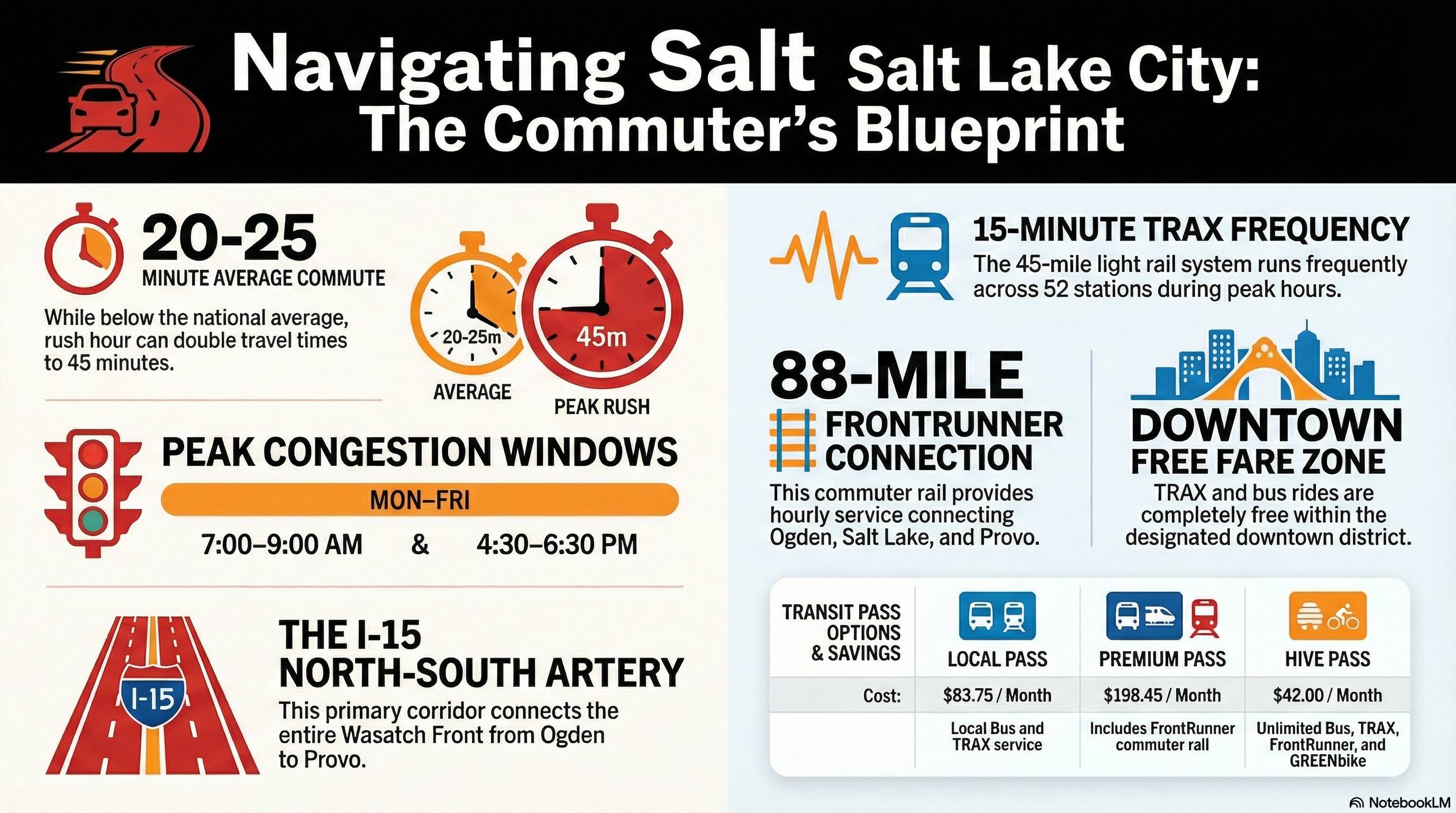
🔹Interstate 15 is the main north-south artery running through Salt Lake Valley, connecting communities from Ogden to Provo. During rush hour (7:00–9:00 AM and 4:30–6:30 PM), I-15 experiences significant congestion, particularly between downtown Salt Lake City and the suburbs of Sandy, Draper, and South Jordan. A commute that takes 20 minutes off-peak can stretch to 30-45 minutes during rush hour.
🔹Interstate 80 runs east-west through Salt Lake City, connecting to Park City and serving as a major freight corridor. Winter weather can slow I-80 traffic considerably, especially during ski season when canyon traffic backs up onto the interstate.
🔹State Route 201 serves the western Salt Lake Valley and experiences heavy commuter traffic from Tooele County residents working in the city.
Average commute times in Salt Lake City run 20–25 minutes, slightly below the national average—but this varies significantly by neighborhood and destination.
TRAX Light Rail System
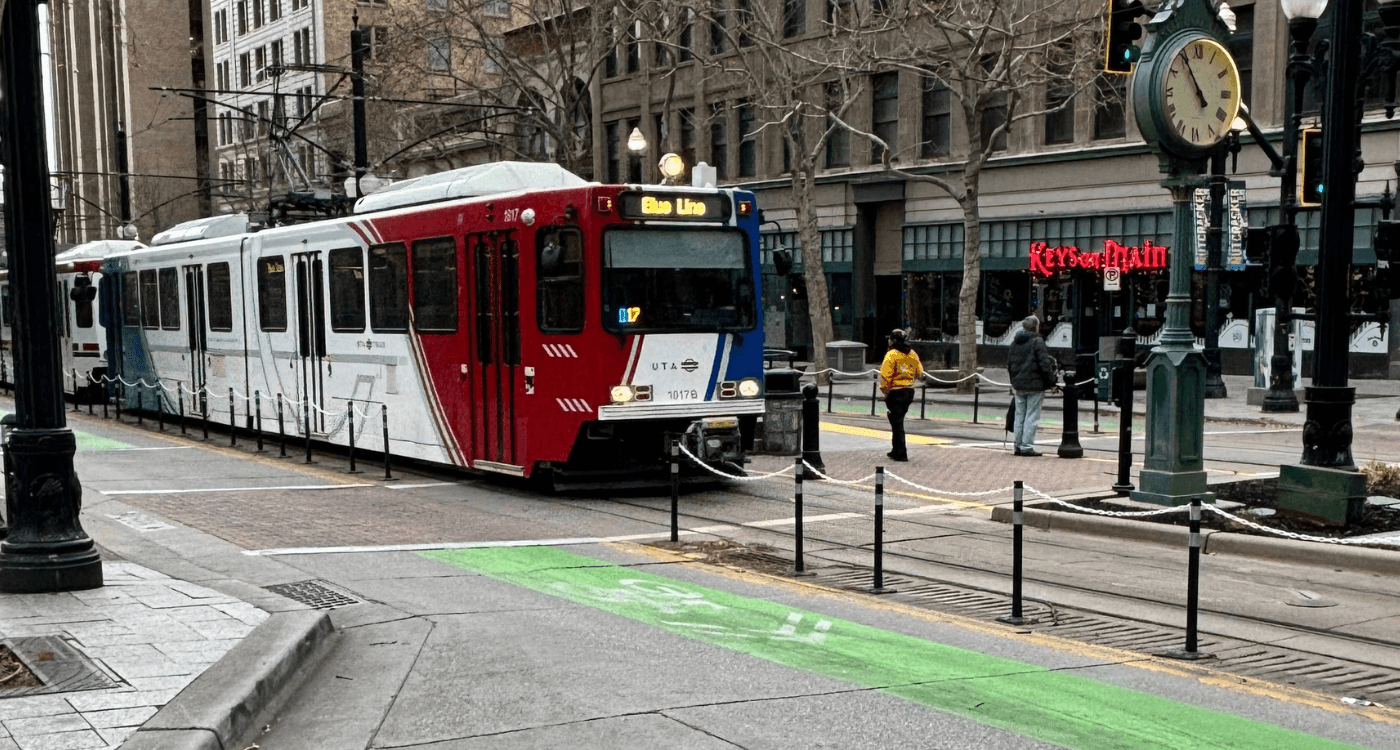
TRAX is Salt Lake City's 45-mile light rail system serving 52 stations across three color-coded lines:
🔹Green Line: Salt Lake International Airport to West Valley City via downtown 🔹Blue Line: Downtown to Draper 🔹Red Line: University of Utah to South Jordan (Daybreak)
TRAX operates Monday–Friday from 4:30 AM–11:30 PM with 15-minute frequency during peak hours. Weekend service runs with 15-minute headways on Saturdays and 30-minute headways on Sundays.
A one-way adult fare is $2.50, but in 2026, most locals just tap their phone or FAREPAY card. The system caps your spending at $5 a day for local transit ($20 a week), so you never pay for a 'monthly' pass upfront anymore.
Downtown Salt Lake City features a Free Fare Zone where TRAX and bus service are completely free, making it easy to move between downtown destinations without paying.
FrontRunner Commuter Rail
UTA Bus Service
The Utah Transit Authority operates extensive bus routes throughout Salt Lake Valley, connecting neighborhoods to TRAX stations, employment centers, and community destinations.
The Hive Pass ($42/month) provides unlimited access to all UTA services including buses, TRAX, FrontRunner, and GREENbike bicycle sharing.
Things to Know
◈ Winter Driving Considerations
Winter weather significantly impacts commuting in Salt Lake City. Snow storms can slow traffic, and canyon routes (Big Cottonwood, Little Cottonwood) sometimes close during heavy snowfall. Investing in quality winter tires and allowing extra time during winter months prevents stress and late arrivals.
◈ Park and Ride Options
UTA operates numerous Park and Ride lots throughout the valley, allowing drivers to park free and transfer to TRAX or FrontRunner for the final leg of their commute. Popular Park and Ride locations include Draper, Murray, and West Valley City.
◈ The "Orange Line" Buzz:
Keep an eye on the new Orange Line project. It's designed to link the Airport dircectly to the University of Utah without having to transger downtown a massive win for students and tech workers on the East Bench.
◈ Skip the Ticket Machine:
Don't bother with paper tickets. In 2026, you can just tap your phone or credit card on the green poles before you board. The system automatically calculates the "Best Fare," so you never pay more than the price of a day pass no matter how much you ride.
FAQ: Commuting in Salt Lake City
Q: Is public transportation in Salt Lake City reliable?
A: Yes. TRAX runs on a consistent 15-minute schedule during peak hours, and FrontRunner provides reliable hourly service between major Wasatch Front cities. UTA's Transit App offers real-time arrival information for all services.
Q: Can I commute to Salt Lake City without a car?
A: It depends on where you live and work. Downtown residents and those near TRAX stations can easily manage without a car. Suburban residents typically need vehicles for daily errands, though TRAX and FrontRunner work well for commuting to downtown jobs.
Q: Can I use the I-15 Express (HOV) Lane for free if I drive an Electric Vehicle (EV)?
A: Not anymore. As of late 2025, the "Clean Vehicle Pass" program officially expired in Utah. Even if you have an EV or a hybrid, you can no longer ride solo in the Express Lane for free. To use those lanes now, you either need at least two people in the car (HOV 2+) or you have to buy an Express Pass transponder to pay the toll. It’s a huge change that caught a lot of new residents off guard, so don't get stuck with a ticket!
Q: Is Salt Lake City adding new public transit options?
A: Yes. UTA's long-range plan (Utah Moves 2050) includes new TRAX extensions in the Granary District and 400 South corridor, plus FrontRunner station additions in Bluffdale and expanded double-track sections to increase train frequency. |

 |
0 Comments
Join the conversation
Be the first to comment
Share your thoughts above.